





![]() |
|
|
|
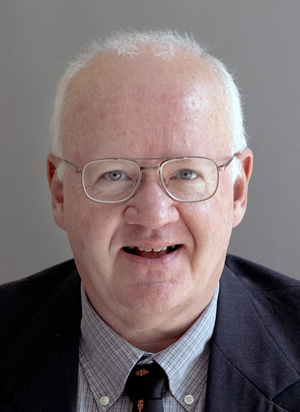
Covington Innovations Home > Consulting Services![]() Michael A. Covington, Ph.D.
|
|
Fall 2011 update: I have a rather full slate of projects at present but am always interested in hearing from people with small projects or projects to be planned for the future. Please contact me if I can be of service to you. Thanks! |
Ph.D. (Linguistics), Yale University, 1982
Senior Research Scientist and Associate Director,
Institute for Artificial Intelligence,
The
University of Georgia
Senior Member, Institute of Electrical and Electronics Engineers
As a computational linguist, I am trained in the computer processing of human languages and the computer modeling of human logical reasoning.
I can develop software that understands English. For example, in a recent demonstration I developed a web page that answered questions in English to help the user choose the right pair of binoculars from a large catalogue. A more common task, which I've tackled several times, is to extract information from natural-language text, or to classify texts according to their content.
I am a widely recognized expert on the Prolog programming language. (Contact me if you need to make an existing Prolog program run faster.) I also use other programming languages to fit the task, especially C# for Windows.
Natural language processing is a hot area for investment right now. I can help you evaluate software, inventions, and patents for potential investment.
My main current research topic is sentiment analysis, getting computers to read Web pages or other texts and rate how much people are saying good or bad things about a given subject. This is a form of text mining or web scraping, gathering information from the Web or other written sources — sometimes even information the writers didn't know whether they were revealing.
I am also familiar with forensic linguistics (author identification), comparing authors to each other to determine who wrote something, or whether it could have been written by a particular kind of person. Unlike those who make more audacious claims, I don't skip an essential step — I always measure how much an author's style varies within itself before comparing it to another author.
I can turn your ideas into software. I specialize in creating user-friendly Windows software to meet a client's needs. Recent projects range from business information management to video editing. I normally program in C# using the Microsoft .NET Framework, but numerous other programming languages and methodologies are available.
I develop microcontroller firmware, microprocessor-controlled equipment, and unusual PC interfaces. My "NOPPP" programmer for the PIC16F84 has resulted in two manufactured products, several magazine articles, and about 100,000 web site visits.
No project is too small (when I'm available). I enjoy quick, simple jobs.
Free download:
Sample of my magazine writing:
I am an experienced writer, and with a Ph.D. in linguistics, I don't just write — I've done research on how to write clearly. Capabilities include documentation writing, technical editing, and evaluation of books in my specialties (in several languages; I read German, French, Spanish, Italian, and others).
I've written half a dozen books and hundreds of magazine articles and have reviewed books and articles for perhaps fifty publishers and journals. Let me know if I can assist you with a writing or publishing project, including grant proposal writing.
Consulting rates: On request.
I work for The University of Georgia
full-time during the school year, and private consulting
is a part-time activity.
Another way to procure my services is through a research contract with the University.
The total cost per hour of work is comparable, and much larger amounts of my time can be
procured, as well as access to laboratories, other scientists and engineers, and graduate students.
Research contracts can be as small as $5000 or less, can include nondisclosure agreements,
and can be set up quickly.
Their only limitation is that the University cannot produce "works made for hire" —
instead, the University
retains the copyright and patent rights, which can then be licensed to the sponsor.
If you think a research contract may be appropriate, please let me advise.